
What’s In This Guide
- Why More Homeowners Choose Decorative Concrete Instead of Plain Slabs
- What Determines Stamped Concrete Driveway Cost?
- How Does a Stamped Concrete Driveway Perform Over Time?
- Which Maintenance Tasks Protect Your Investment?
- What Are the Most Popular Stamped Concrete Driveway Patterns?
- How Does Stamped Concrete Compare With Other Driveway Materials?
- When Does a Decorative Driveway Deliver the Greatest Value?
- When Decorative Concrete May Not Be the Best Option
- Frequently Asked Questions
- Make an Informed Driveway Decision
Quick Facts
- A stamped concrete driveway can improve curb appeal while still offering the strength of poured concrete.
- Project cost depends on driveway size, base prep, finish choices, and pattern complexity.
- Routine cleaning and resealing help preserve color, texture, and surface protection.
- The best value comes from balancing design, durability, maintenance, and installation quality.
A driveway sets a property’s first impression. Stamped concrete improves curb appeal by mimicking higher-end materials like stone, brick, or slate while offering the strength of durable poured concrete without individual pavers.
Whether it is worthwhile depends on installation quality, maintenance expectations, climate, drainage, traffic, and budget.
This guide explains the benefits, maintenance needs, cost factors, and design options to consider before requesting estimates.
Why More Homeowners Choose Decorative Concrete Instead of Plain Slabs
Greater Design Flexibility
A stamped concrete driveway offers more visual variety than a standard concrete surface. Different colors, textures, and finishes allow homeowners to create a driveway that better complements the style of the home and surrounding landscape.
Better Curb Appeal
Decorative concrete is often chosen because it creates a more finished and inviting appearance. Many homeowners view the driveway as an extension of the property’s exterior design rather than simply a place to park vehicles.
More Premium-Looking Finishes
A modern stamped concrete driveway can replicate the appearance of natural stone, brick, slate, or other high-end materials without requiring multiple individual pieces. This gives homeowners more design options while maintaining a continuous concrete surface.
Wider Range of Decorative Options
From subtle textures to more detailed finishes, various stamped concrete driveway patterns make it easier to match different architectural styles. The right pattern depends on personal preference, the home’s exterior, and the overall design goals.
Long-Term Visual Value
Many property owners invest in decorative concrete because they want an upgrade that continues to enhance the property’s appearance over time. While maintenance is still part of ownership, a well-maintained decorative surface can remain attractive for many years.
Customization That Fits Different Homes
Decorative concrete works across a variety of home styles, lot sizes, and landscape designs. With numerous colors, borders, and finishing techniques available, homeowners have flexibility to create a driveway that feels appropriate for the property without relying on a one-size-fits-all approach.
What Determines Stamped Concrete Driveway Cost?
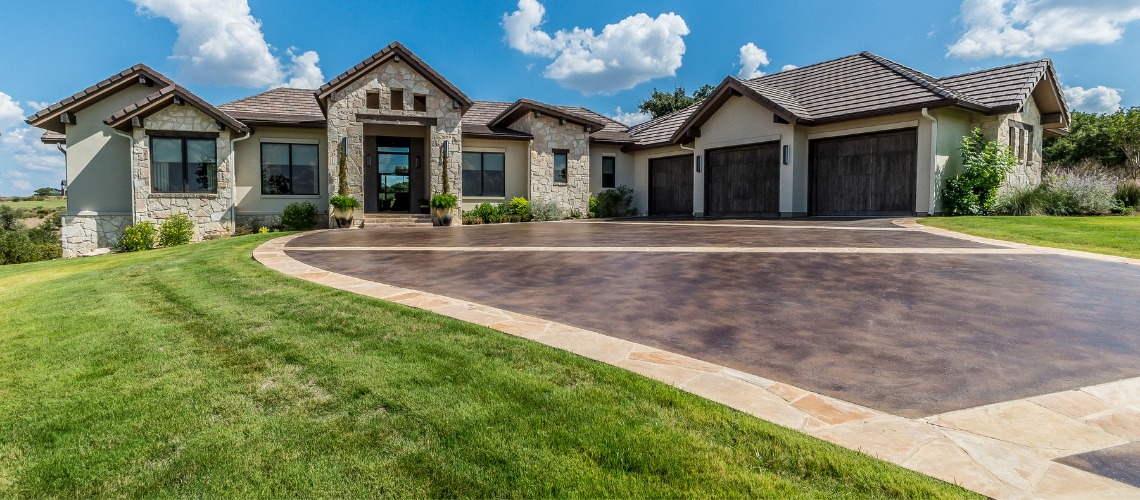
Several factors influence the overall project price, so estimates should not be compared by square footage alone. A detailed proposal should clearly explain the scope of work, materials, site conditions, and finish options included.
Driveway Size and Total Surface Area
Larger driveways require more concrete, labor, reinforcement, coloring materials, and finishing time. Curves, parking pads, and irregular layouts can also increase installation complexity.
Base Preparation and Reinforcement
A strong base supports the finished surface. Excavation, grading, compacted aggregate, and proper reinforcement can affect pricing, but they also help reduce settlement and cracking risks.
Decorative Colors and Surface Finishes
Color choices can influence the overall stamped concrete driveway cost. Integral color, color hardeners, release agents, stains, borders, and custom highlights may add labor and material costs.
Pattern Selection and Design Complexity
Simple textures are usually easier to install than detailed layouts. Popular stamped concrete driveway patterns like ashlar slate, random stone, brick, and cobblestone can create visual interest while keeping the design practical.
How Does a Stamped Concrete Driveway Perform Over Time?
A decorative driveway should look good and hold up under normal use. Long-term performance depends on installation quality, drainage, maintenance, and how the stamped concrete driveway is used throughout the year.
Daily Vehicle Traffic
Residential driveways handle parked vehicles, turning tires, and regular movement. Proper slab thickness, reinforcement, and base preparation help support that repeated use.
Weather Exposure and Freeze-Thaw Conditions
Temperature changes can stress concrete over time. Drainage, control joints, and sealing help reduce moisture-related wear, especially in colder climates.
Sunlight and Color Retention
UV exposure can gradually affect decorative finishes. Quality sealers help protect the color and keep the surface looking more consistent.
Oil, Salt, and Surface Protection
Driveways are exposed to automotive fluids, dirt, salt, and deicing products. Prompt cleaning and proper winter care can help limit stains and surface damage.
Which Maintenance Tasks Protect Your Investment?
Decorative concrete requires maintenance, but most tasks are straightforward and can significantly extend the life of the surface.
Clean the Surface Regularly
Leaves, dirt, grass clippings, and standing debris can trap moisture against the concrete.
Routine sweeping and occasional washing help maintain appearance while preventing surface buildup that may become more difficult to remove over time. Pressure washing may be appropriate in some situations, but excessive pressure can gradually wear protective sealers if used improperly.
Reseal at Recommended Intervals
One of the most important maintenance tasks is resealing. A quality sealer helps protect decorative coloring, improves resistance to moisture intrusion, and reduces staining from everyday use. Environmental conditions, traffic levels, and weather exposure all influence how frequently resealing may be needed.
Use Proper Snow Removal Practices
Snow removal deserves special attention on decorative concrete. Plastic-edged shovels and properly adjusted snowplow blades help reduce unnecessary scraping. Homeowners should also ask contractors which ice-melting products are appropriate for newly installed concrete, since some chemicals may affect surface durability.
Inspect Small Issues Early
Hairline cracks, minor surface wear, or areas where water begins to collect should be evaluated before they become more significant. Routine inspections after winter can identify maintenance needs while repairs remain relatively simple and less expensive.
What Are the Most Popular Stamped Concrete Driveway Patterns?
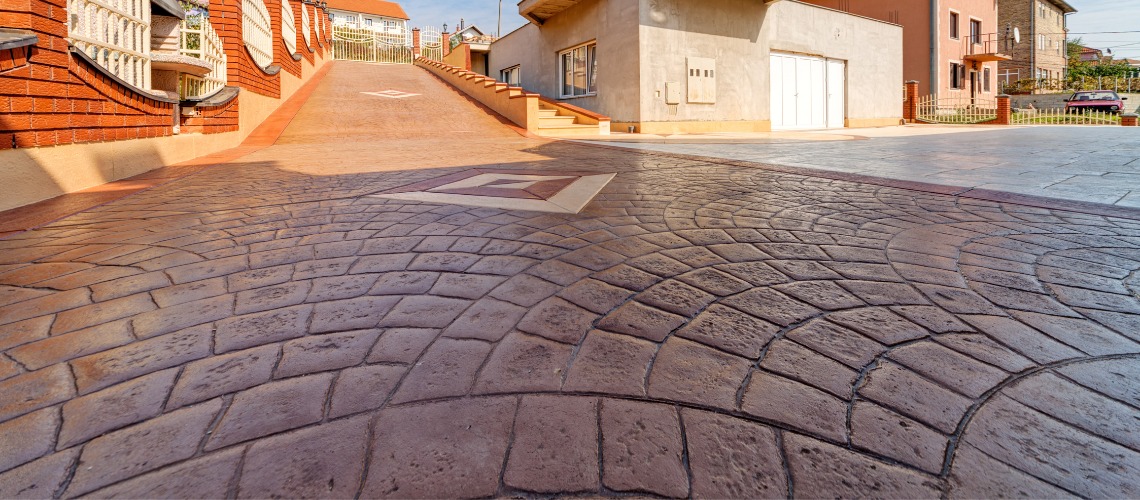
Choosing among different stamped concrete driveway patterns is often one of the most enjoyable parts of the planning process. The right pattern should complement the home’s architecture instead of competing with it.
Some of the most common options include:
Ashlar Slate
A timeless choice featuring rectangular stone shapes with clean lines. It works well with both traditional and contemporary homes.
Random Stone
Designed to resemble naturally placed stone, this pattern creates a more organic appearance with varied shapes and textures.
Cobblestone
Inspired by historic streets, cobblestone patterns provide classic character and pair well with colonial or cottage-style homes.
Brick
Brick stamping offers a structured, symmetrical appearance while avoiding many of the maintenance concerns associated with individual brick pavers.
Wood Plank
Although less common for driveways, wood plank textures can create a distinctive decorative accent in certain landscape designs.
When comparing stamped concrete driveway patterns, homeowners should also consider texture depth. Highly aggressive textures may collect more debris or require additional attention during snow removal, while moderate textures often balance appearance with practicality.
How Does Stamped Concrete Compare With Other Driveway Materials?
Choosing a driveway material is about balancing appearance, durability, maintenance, and budget. While every material has advantages, understanding the tradeoffs makes it easier to select the right solution for your property instead of simply choosing the lowest price.
Material | Advantages | Considerations |
Stamped Concrete | Decorative appearance, customizable colors and textures, long lifespan when maintained | Requires periodic sealing and proper installation |
Plain Concrete | Durable, lower initial cost, simple appearance | Limited design flexibility |
Asphalt | Lower upfront investment, easier repairs | Requires more frequent maintenance and resurfacing |
Concrete Pavers | Individual pieces can be replaced, premium appearance | Higher installation cost and possible weed growth between joints |
Exposed Aggregate | Slip-resistant texture, decorative finish | Fewer pattern customization options |
When Does a Decorative Driveway Deliver the Greatest Value?
A decorative driveway is often viewed as both a functional improvement and an investment in the property’s overall appearance.
It typically delivers the greatest value when:
- The home is undergoing an exterior renovation.
- Landscaping improvements are being completed simultaneously.
- Homeowners plan to remain in the property for several years.
- Curb appeal is a priority before listing a home for sale.
- The existing driveway has reached the end of its service life.
When Decorative Concrete May Not Be the Best Option
Properties With Ongoing Drainage Issues
Poor drainage can affect the performance of any driveway material. Before installing a stamped concrete driveway, existing water runoff or grading concerns should be evaluated so they can be addressed as part of the overall project.
Areas With Frequent Ground Movement
Properties that experience shifting soil or recurring settlement may require additional site preparation before decorative concrete is installed. Evaluating site conditions early helps determine whether extra measures are appropriate.
Projects With Very Limited Maintenance Plans
Decorative concrete is not maintenance-free. Homeowners who prefer a surface requiring little ongoing care should understand that periodic cleaning and resealing help maintain appearance and protect the finish over time.
Driveways Subject to Heavy Commercial Traffic
Most residential decorative concrete performs well under normal household use, but properties with consistently heavy vehicles or specialized equipment may require a different pavement solution based on expected loading conditions.
Budgets Focused Only on the Lowest Initial Cost
A decorative finish typically involves additional materials and installation steps compared to plain concrete. While the stamped concrete driveway cost may provide long-term value for many homeowners, projects driven solely by the lowest upfront price may find simpler alternatives more suitable.
Designs That Prioritize Function Over Appearance
If visual appeal is not a priority, a standard concrete surface may adequately meet the property’s needs. Comparing maintenance expectations, performance goals, and overall project objectives helps determine whether decorative finishes are the right investment.
➤ ALSO READ: Stamped Concrete Patio Cost and Value: What Homeowners Should Know Before They Build
Frequently Asked Questions
How long does stamped concrete typically last?
With proper installation and routine maintenance, decorative concrete driveways commonly provide decades of service. Lifespan depends on site preparation, drainage, traffic, weather exposure, and ongoing care.
Can stamped concrete crack?
Like all concrete, decorative concrete can develop cracks over time. Proper base preparation, reinforcement, joint placement, and drainage reduce the likelihood of significant cracking but cannot eliminate it entirely.
Is decorative concrete slippery when wet?
Surface texture, sealer selection, and installation methods all influence traction. Contractors can recommend finishes that balance appearance with slip resistance for residential driveways.
How often should a driveway be resealed?
The ideal schedule depends on climate, traffic, and product selection. Periodic resealing helps preserve color, reduce moisture penetration, and maintain the protective finish.
Does a modern stamped concrete driveway increase curb appeal?
Many homeowners choose a modern stamped concrete driveway because it creates a clean, contemporary appearance that complements today’s residential architecture. While resale value depends on many factors, attractive exterior improvements often enhance first impressions.
Make an Informed Driveway Decision
Every property has different needs, from drainage and soil conditions to traffic patterns and design goals. Comparing materials, maintenance needs, and installation details helps homeowners choose a driveway that looks good and performs well over time.
SMJ Homes, Inc can evaluate your driveway area, review stamped concrete options, and recommend an installation approach based on your drainage, layout, design goals, and budget.
Contact SMJ Homes, Inc to discuss your driveway project.