
What’s In This Guide
- Is Stamped Concrete Good Around a Pool?
- Pool-Deck Safety Starts With Wet-Surface Traction
- Does Stamped Concrete Get Too Hot Around Pools?
- How Stamped Concrete Handles Water, Sealing, and Upkeep
- Drainage, Joints, and New York Weather Matter
- Pros and Cons of Stamped Concrete Around Pools
- How to Plan a Stamped Concrete Pool Deck
- Frequently Asked Questions
- Discuss Your Stamped Concrete Pool Deck With SMJ Homes
A pool surround has to do more than look polished. It must provide dependable footing when wet, remain comfortable under bare feet, drain properly, and withstand sun exposure, treated pool water, routine cleaning, and New York winters. Material selection is therefore as much a practical safety decision as a design choice.
So, is a stamped concrete pool deck a good choice? It can be. However, a glossy sealer, an overly smooth texture, a dark color, or poor drainage can make the surface slippery or uncomfortable underfoot. Its performance depends on the complete material specification and the quality of the installation.
Quick Facts
- Stamped concrete can be a durable, attractive pool-deck option when properly specified and installed.
- Wet-surface safety depends on the texture, sealer, traction additive, and routine cleaning.
- Light or medium colors typically stay more comfortable underfoot than dark finishes.
- Proper drainage, control joints, curing, and freeze-thaw protection help reduce long-term damage.
- Regular cleaning, inspection, and resealing are necessary to maintain appearance and traction.
Is Stamped Concrete Good Around a Pool?
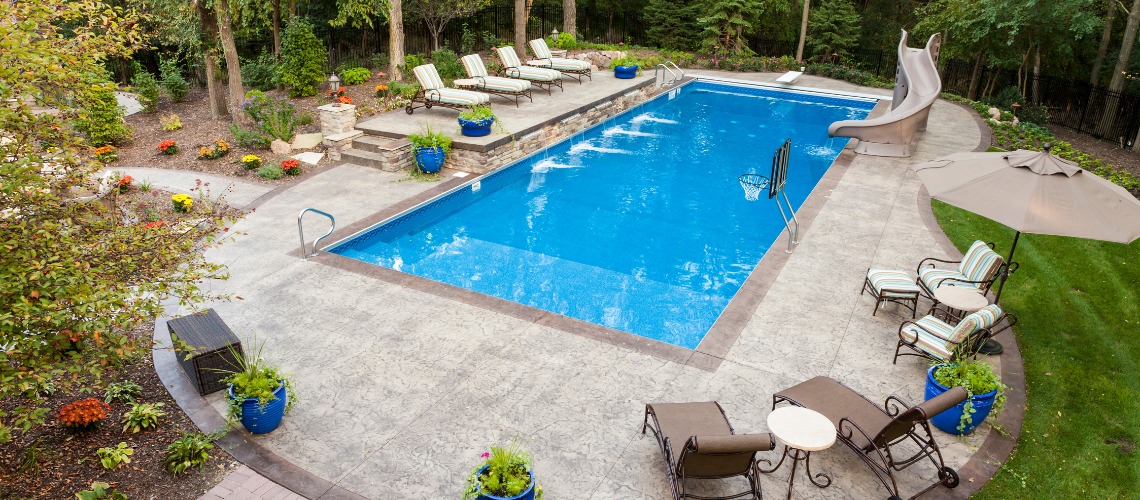
Stamped concrete is a strong pool-deck option for homeowners who want the appearance of stone, slate, brick, or tile without installing hundreds of individual units. It works best when the project includes:
- A texture that provides traction without hurting bare feet
- A low-sheen, exterior-rated sealer compatible with wet areas
- A traction additive when the selected system needs one
- A lighter or medium color to limit solar heat gain
- Correct drainage and control-joint planning
- A concrete mix and installation method suited to freeze-thaw exposure
It may not be the right choice if you need easy access to utilities beneath the deck, prefer a surface that allows individual sections to be replaced, or want to avoid periodic cleaning and resealing.
Pool-Deck Safety Starts With Wet-Surface Traction
Splashing, wet feet, sunscreen, leaves, and organic buildup can reduce traction. Stamped concrete is not inherently slippery, but it is not automatically slip-resistant. Three design choices have the greatest effect:
Texture
A moderate, multidirectional texture generally provides better traction in wet conditions than a smooth finish. However, the texture should not feel abrasive under bare feet or cause chairs and other furniture to sit unevenly. Test a cured sample while it is wet rather than choosing a finish from a photograph alone.
Sealer
High-gloss film-forming sealers can become slick in wet conditions, especially after heavy application or repeated coats. For stamped concrete around pools, discuss a matte or low-sheen product intended for exterior wet areas. Sealer type, surface preparation, application, and maintenance are connected decisions.
Traction Additive
Some sealer systems can be combined with fine polymer or mineral grit to improve traction. The additive must be compatible with the coating and distributed evenly. Using too much can create an uncomfortable surface that is difficult to clean. Even a properly finished deck requires routine maintenance because algae, dirt, body oils, and sunscreen can make a textured surface slippery. Effective traction depends on both the original specification and ongoing care.
Does Stamped Concrete Get Too Hot Around Pools?
Any sun-exposed hardscape can become hot. Color, reflectance, shade, wind, and material properties affect surface temperature. Dark concrete generally absorbs more solar energy than lighter beige, gray, or sand tones.
Research from the U.S. Environmental Protection Agency identifies solar reflectance as a major factor affecting maximum pavement temperature. The research also notes that local conditions and other surface properties influence actual temperatures. For a pool deck, color selection therefore affects practical comfort as well as appearance.
To reduce heat:
- Choose a light or medium base color.
- Limit large areas of very dark accent color.
- Add umbrellas, pergolas, or other planned shade.
- Request physical samples because digital colors can be misleading.
- Test the proposed color and sealer combination in direct sun when possible.
Lighter concrete can still become hot in peak summer sun. Shade and footwear remain sensible precautions.
How Stamped Concrete Handles Water, Sealing, and Upkeep
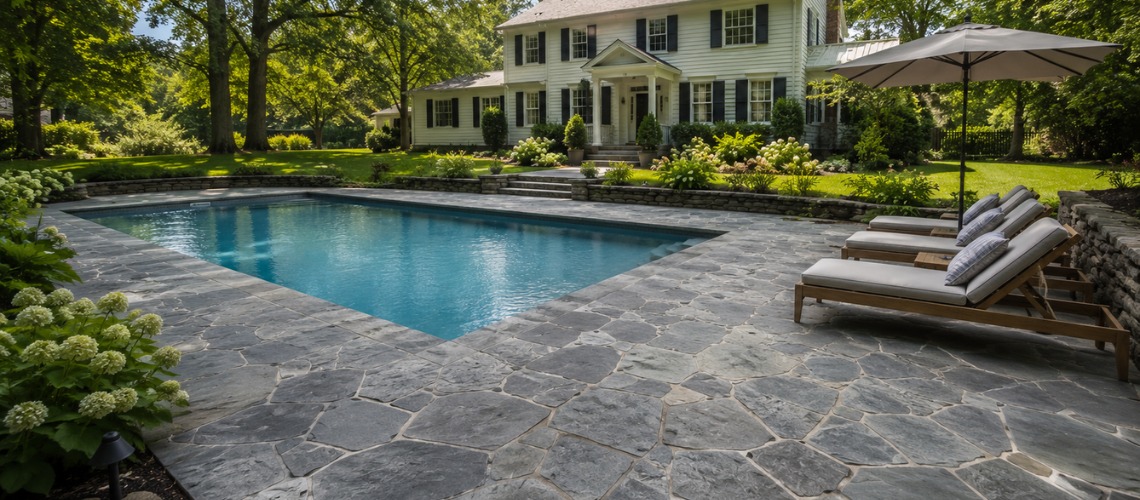
Concrete is durable, but pool decks face constant exposure to moisture, treated water, spills, foot traffic, and changing weather. Applying a suitable sealer can help:
- Resist stains from dirt, leaves, and pool chemicals
- Preserve the concrete’s color and appearance
- Make routine cleaning easier
Keep in mind that sealers do not make concrete waterproof or prevent cracking.
Routine maintenance should include:
- Sweeping away leaves and debris
- Rinsing the surface regularly
- Washing occasionally with a compatible mild cleaner
Avoid excessive pressure washing because it can damage the finish. Use only cleaners recommended for the sealer, since incompatible products may dull or weaken the coating.
Resealing should follow the product manufacturer’s instructions and the surface’s actual condition. Resealing frequency depends on factors such as:
- Sun exposure
- Foot traffic
- Cleaning methods
- Sealer type
- Application quality
Common signs that resealing may be needed include:
- Uneven or diminished sheen
- Faded or dull color
- Water soaking into the surface instead of beading
- Visible wear along high-traffic paths
- Reduced resistance to staining
Before resealing, confirm that the surface is clean, dry, and compatible with the new product. Applying another coat without first evaluating the existing sealer can cause whitening, peeling, uneven gloss, or reduced traction. Cracks and drainage problems should also be inspected and addressed before resealing begins.
Drainage, Joints, and New York Weather Matter
Standing water can create both safety and durability problems. The slab should direct water toward approved drainage areas and away from nearby structures without creating an uncomfortable walking surface. The International Swimming Pool and Spa Code includes requirements for deck slope, but the final design must comply with the code adopted in the project’s jurisdiction and account for site-specific conditions.
Concrete expands, contracts, and shrinks as temperature and moisture conditions change. Properly placed control joints help manage cracking and should be coordinated with the pool shell, coping, drains, corners, columns, and changes in deck width. Decorative pattern lines do not replace a properly designed joint layout.
Cold-weather durability requires particular attention in New York. The concrete mix, water-to-cement ratio, curing process, drainage, and finishing methods all affect long-term performance. Ask how the proposed slab and curing plan are designed to withstand exterior freeze-thaw conditions rather than treating sealer as the primary form of protection.
For NYC properties, confirm approvals before work begins. All pools installed in New York City must comply with the City’s safety and quality-of-life standards. Construction requirements are outlined in the NYC Building Code, specifically Section 3109. Additional regulations may also apply depending on the property’s location, zoning district, or landmark designation.
A licensed design professional and the appropriate city agencies can help determine which permits, reviews, and technical requirements apply to the project.
Pros and Cons of Stamped Concrete Around Pools
When choosing a pool deck material, it is important to weigh the aesthetic benefits of stamped concrete against its specific maintenance and performance requirements.
Advantages
- Design flexibility: Patterns, colors, borders, and accent bands can coordinate with the home, coping, landscaping, and outdoor furniture.
- Continuous appearance: The deck can resemble masonry without many separate units.
- Practical cleaning: There are fewer sand-filled joints than with many paver installations, though textured recesses still collect debris.
- Custom layout: Installers can shape the surface around curves, steps, equipment zones, and seating areas.
- Refreshable appearance: Worn color or sealer can sometimes be restored, although achieving an exact match with the surrounding surface may be difficult.
Tradeoffs
- Cracking remains possible: Proper base preparation, reinforcement strategy, joints, curing, and drainage reduce risk but cannot guarantee a crack-free slab.
- Sealer requires attention: An unsuitable or overapplied coating can affect traction and appearance.
- Dark colors hold more heat: A dramatic finish may be less comfortable under bare feet.
- Repairs may show: Patches can interrupt the original texture or color blend.
- Installation is timing-sensitive: Stamping, coloring, jointing, and curing leave little room for error.
How to Plan a Stamped Concrete Pool Deck
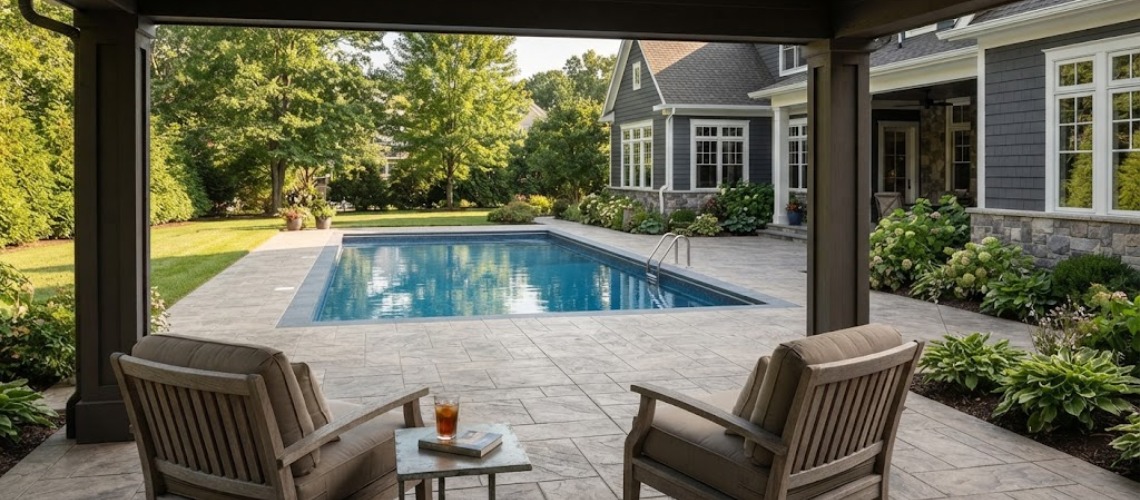
Careful planning helps ensure that a stamped concrete pool deck is safe, durable, and suited to the property.
1. Confirm Local Requirements
Identify all applicable permit, zoning, pool-barrier, walkway, accessibility, and drainage requirements before finalizing the layout. Requirements vary by property type, project scope, and jurisdiction.
2. Set Safety and Comfort Priorities
Consider who will use the pool, where foot traffic will be heaviest, and which areas are most likely to remain wet. The needs of children, older adults, pets, and frequent guests may influence the preferred texture and layout.
3. Compare Cured Samples
Review the proposed pattern, color, sheen, and texture under conditions similar to those at the site. Wet the cured sample and assess both traction and barefoot comfort. Do not approve the finish based on a catalog image alone.
4. Coordinate Texture, Color, and Sealer
Treat the texture, color, sealer, and traction additive as parts of one coordinated system. Specify a texture suited to wet conditions, a color that limits heat absorption, a compatible exterior sealer, and a traction additive when appropriate.
5. Review Drainage and Joint Plans
Confirm how water will drain and where control joints, drains, coping transitions, and equipment pads will be located. Resolve any conflicts before the concrete is poured.
6. Get the Maintenance Plan in Writing
Ask which cleaners are compatible, how to recognize sealer wear, what to avoid during winter, and who should handle repairs or resealing.
Frequently Asked Questions
Is stamped concrete slippery around a pool?
Stamped concrete can become slippery if the texture is too smooth, the sealer is glossy or applied too heavily, or algae and residue accumulate on the surface. A moderate texture, a sealer system designed for exterior wet areas, an appropriate traction additive, and regular cleaning can improve traction.
What is the best stamped concrete pattern for a pool deck?
Choose a pattern with texture in multiple directions and shallow relief that remains comfortable under bare feet. Deep grout lines may trap debris, hold water, or make furniture less stable. Test a cured sample while it is wet before approving the finish.
How often should stamped concrete pool decking be sealed?
There is no universal resealing interval. The sealer type, sun exposure, foot traffic, pool chemistry, cleaning methods, and quality of the previous application all affect wear. Follow the manufacturer’s guidance and inspect the deck for fading, increased water absorption, uneven sheen, or worn traffic paths.
Can stamped concrete crack around pools?
Yes. Concrete can crack because of shrinkage, settlement, temperature changes, poor drainage, or movement around the pool structure. Proper base preparation, correctly placed joints, suitable materials, adequate curing, and experienced installation can reduce the risk but cannot eliminate it.
Can you put stamped concrete over an existing pool deck?
Sometimes. A stamped overlay may be suitable when the existing slab is stable, properly sloped, and free from significant movement or widespread deterioration. Before an overlay is approved, the slab should be inspected for structural cracks, delamination or hollow-sounding areas, drainage problems, and incompatible coatings.
Discuss Your Stamped Concrete Pool Deck With SMJ Homes
A successful pool deck balances traction, surface temperature, barefoot comfort, drainage, maintenance, and design. SMJ Homes offers concrete stamping, resurfacing, staining, and sealing services throughout its New York service area.
If you are comparing pool-deck options for a property in New York City or the greater New York area, contact SMJ Homes to discuss your project and confirm service availability at your address.