
Table of Contents
Key Takeaways
✔ Stamped concrete can go over existing concrete, but it usually requires a stampable overlay, not direct stamping on the old slab.
✔ The slab has to be stable. Overlays cannot fix structural movement, deep cracking, or heaving.
✔ Surface prep is the #1 success factor. The overlay only lasts if it bonds properly to the existing concrete.
✔ Driveways are higher risk because vehicles, salt, and freeze-thaw cycles stress the overlay more than patios.
✔ Sealing is essential in Westchester County to protect the finish and extend the lifespan.
Here’s the short answer first: yes, you can get stamped concrete over existing concrete, but it almost always requires a stampable overlay, not stamping directly onto an old slab.
When done correctly, the result can look like natural stone, brick, slate, or tile, without the demolition cost or mess. That’s why flooring contractors and decorative concrete pros are seeing a shift in demand: homeowners want premium curb appeal upgrades that avoid tear-out, especially in high-cost markets like Westchester County.
The catch is that overlays succeed or fail based on what you can’t see at first glance: the slab’s stability, surface prep, and drainage. Industry guidance on concrete overlays consistently points to one key requirement: a strong bond between old concrete and the new overlay layer. Without that bond, overlays can crack, delaminate, or flake.
Can You Put Stamped Concrete Over Existing Concrete?
Yes, if the existing concrete is in good structural condition and you’re using the right system. Most modern stamped overlay projects rely on a polymer-modified concrete overlay product designed to bond to existing slabs and accept stamping patterns.

When Existing Concrete Works
- The slab is stable and not sinking or heaving
- Cracks are minor and not actively moving
- The surface isn’t heavily spalled, crumbling, or scaling
- Water drains away from the house (no ponding)
- You can mechanically prep it for proper adhesion
When it Will Not Work (and why)
- Deep structural cracks, major settling, or movement
- Severe flaking, scaling, or soft concrete at the surface
- Standing water that freezes (common in NY winters)
- Existing coatings or sealers that can’t be removed
- Moisture problems that push the overlay off the slab
Decorative Concrete Overlay Options for Old Concrete
Not all decorative concr ete is the same. The best option depends on how much texture you want, where the slab is, and how it will be used.
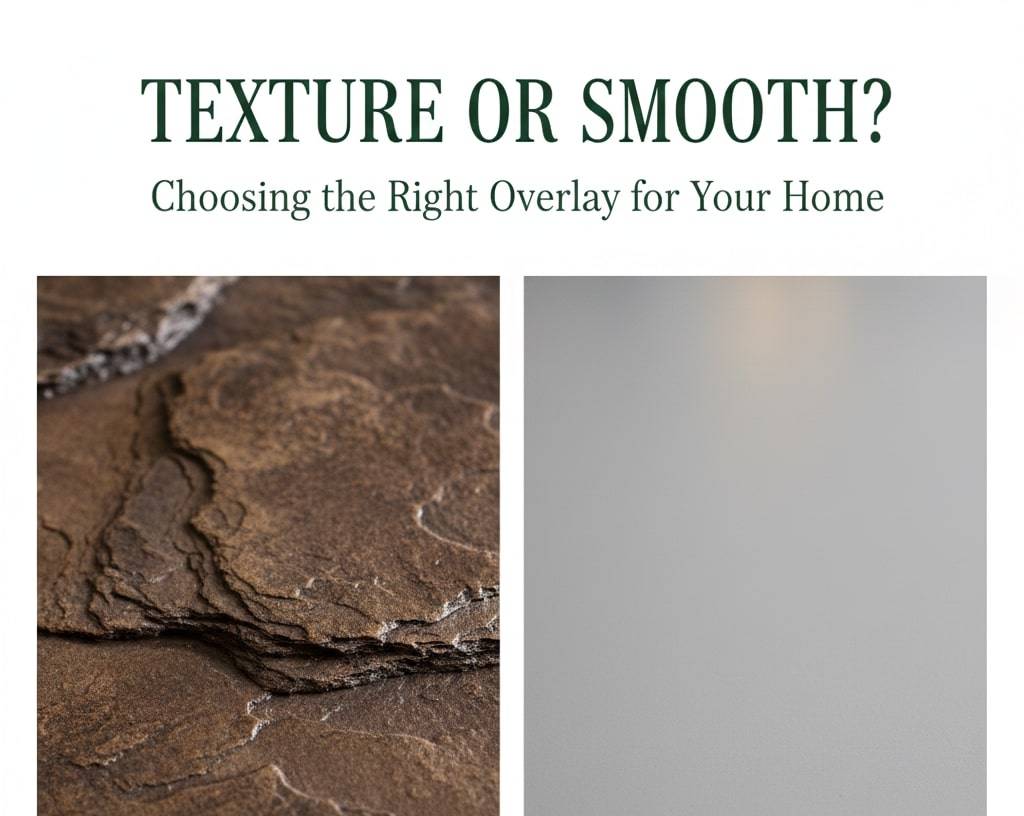
Stampable Overlay (best for most stamped concrete upgrades)
A stampable overlay is a thicker overlay designed specifically for stamping concrete patterns. It creates a deeper texture than thin resurfacing products and can accept color and antiquing for natural variation. If your goal is a stamped concrete patio, walkway, or driveway refresh, this is usually the go-to approach.
Microtopping (best for smooth modern finishes, not deep stamping)
Microtoppings are thin and sleek, often used indoors or for modern outdoor looks. They can be stained and textured lightly, but they are not meant to hold deep stamp patterns like slate or cobblestone.
Where Overlays Work Best in Westchester County Homes
- Patios and walkways (excellent overlay candidates)
- Front entry slabs (big visual impact with low square footage)
- Pool decks (with slip-resistant textures)
- Basement slabs (only after moisture evaluation)
The key is matching the product to real-world performance needs, especially in freeze-thaw regions like the Hudson Valley.
Stamped Concrete Driveway Overlay: What Homeowners Must Know
A stamped concrete driveway overlay can look incredible, but driveways are a different beast than patios. They take heavy loads, tire turning stress, and winter abuse. That’s why many pros treat driveway overlays more cautiously than walkway or patio projects.
Why Driveways are Harder than Patios
- Vehicle weight compresses and stresses the overlay
- Tire torque can shear weak overlay bonds
- Salt exposure accelerates wear and surface scaling
- Freeze-thaw cycles exploit tiny weaknesses fast
When a Stamped Concrete Driveway Overlay is a Good Idea
- The base slab is thick, stable, and well-draining
- Surface damage is cosmetic, not structural
- Prep can be aggressive enough to create a bonding “tooth.”
When Replacement Makes More Sense
- The driveway has major cracking, sinking, or widespread deterioration
- There is a poor slope, causing puddles and winter ice sheets
- The slab is at the end of its life cycle
If your driveway is failing structurally, an overlay often becomes a short-term patch instead of a lasting solution.
Concrete Stamping Over Existing Concrete: Step-by-Step Process
Stamped concrete over an old slab is not a “one product fixes all” project. It’s a system that depends on preparation, proper thickness, correct stamping timing, and sealing.
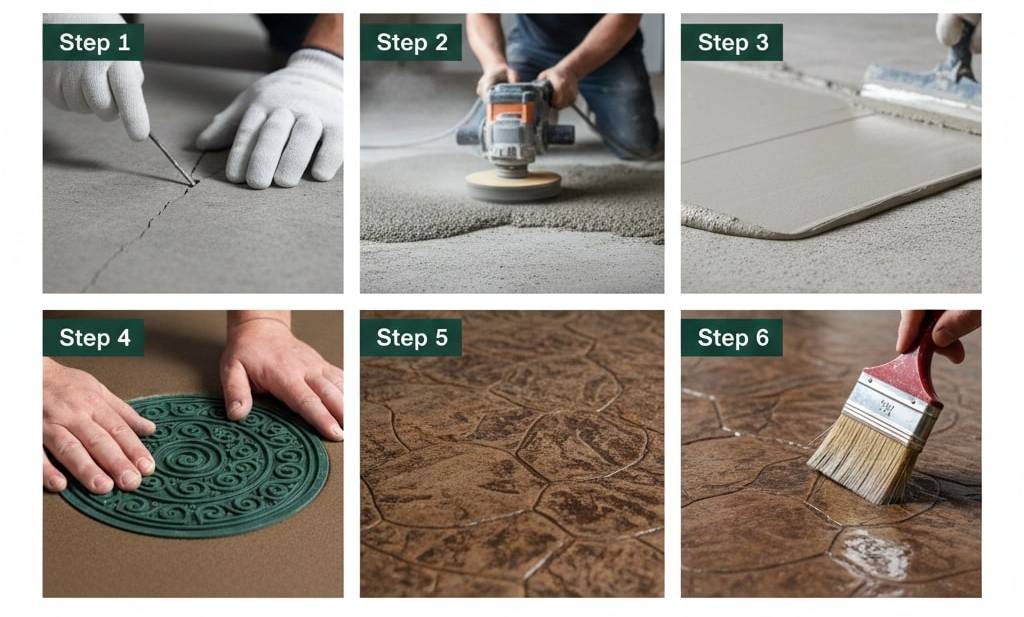
Step 1: Inspect and Repair the Existing Slab
Pros look for signs of movement and slab instability. Repairs may include crack treatment, patching spalls, and correcting drainage issues. If a crack is moving, it’s important to understand that an overlay cannot stop that movement.
Step 2: Surface Prep for Bonding
Surface prep is the make-or-break step. If the existing concrete isn’t properly cleaned and mechanically profiled, the overlay can’t bond the way it’s designed to. That’s when you see the common failures homeowners regret most: peeling, flaking, and delamination. Professional installers typically remove sealers, oils, and coatings first, then use grinding or shot blasting to create the right texture so the overlay grips the slab instead of sitting on top of it.
Step 3: Apply the Stampable overlay
The overlay is mixed, spread, and leveled at the required thickness so it can accept stamping without losing pattern depth. Too thin and stamps bottom out. Too thick and it may cure unevenly.
Step 4: Stamping Concrete
This is where timing matters. Stamps must be applied when the overlay is firm enough to hold texture but still workable. Release agents are often used to prevent sticking and add color variation. Solomon Colors notes that overlays can be antiqued and stained to create depth similar to cast-in-place stamped concrete.
Step 5: Add color and finish detail
Coloring options can include integral color, stains, and antiquing releases. The goal is to mimic natural material variation so it doesn’t look flat or artificial.
Step 6: Cure and Seal
Sealing is not optional in climates like Westchester County. A quality sealer helps resist staining, moisture intrusion, and surface wear. It also makes cleaning easier and keeps colors richer longer.
How to Stamp Concrete Without Costly Mistakes
Stamped overlays fail for predictable reasons. The problem is most of those reasons happen early, before the homeowner realizes anything went wrong.
The 6 Most Common DIY Failures
- Skipping mechanical surface preparation
- Applying the overlay too thin
- Stamping too early or too late
- Using the wrong release method or not enough release
- Sealing too soon and trapping moisture
- Ignoring joints and slab movement
Surface prep is repeatedly identified as critical because a bonded overlay only performs as designed when the bond is strong.
Will Cracks Show Through?
Sometimes, yes. This is called “telegraphing,” and it’s most common when cracks are movement-related. Skilled contractors can reduce visibility with smart joint layout, repair strategies, and design choices, but an overlay cannot permanently hide structural movement.
Cost Factors for Stamped Concrete Overlays in Westchester County
Stamped concrete overlays are often more budget-friendly than full replacement, but the final price depends on what the slab needs and the complexity of the design.
What Drives the Final Price
- Surface prep difficulty (especially removing old sealers)
- Crack repairs and patching needs
- Square footage and access challenges
- Pattern complexity and custom borders
- Color system complexity
- Sealer type and protective finish
Overlay vs Tear-out Cost Comparison
Overlays typically reduce labor and disposal costs because you’re not demolishing the slab. Tear-out becomes necessary when the concrete is structurally failing or cannot support a reliable bonded overlay.
How to Maintain Stamped Concrete in NY Weather
Stamped concrete is durable, but maintenance matters more in the Northeast.
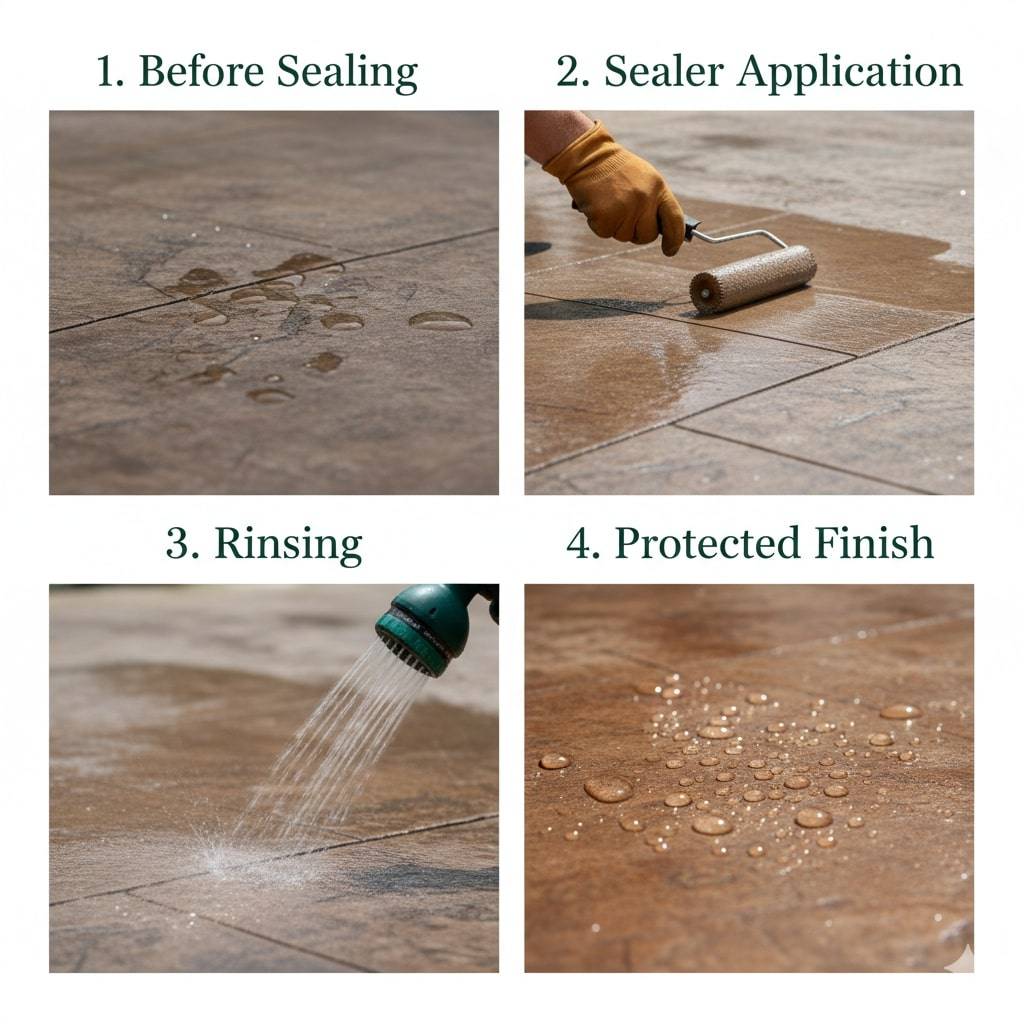
Cleaning and Preventing Damage
- Use gentle cleaners and rinse regularly
- Avoid harsh deicers that accelerate surface wear
- Shovel carefully and avoid metal scraping that can gouge sealers
How Often to Reseal
Resealing schedules vary by exposure and traffic. High-traffic surfaces and driveways often need resealing sooner due to salt, snow removal, and wear. If the surface looks dull, absorbs water, or stains more easily, the sealer may be wearing out.
Frequently Asked Questions
Can you put stamped concrete over existing concrete?
Stamped concrete overlays typically cost less than a full tear-out and replacement, but pricing depends on surface prep, repairs, pattern complexity, coloring, and sealing. The condition of the existing slab is the biggest cost driver.
How much does stamped concrete overlay cost?
With proper installation and routine resealing, stamped concrete overlays can last 10–20 years. High-traffic areas and driveways may need more frequent maintenance due to salt and freeze-thaw exposure.
How long does stamped concrete overlay last?
Stamped concrete comes in a wide range of colors—from natural stone tones to vibrant modern shades. Pigments can be mixed into the concrete or applied to the surface for depth. Custom color blends allow a personalized finish.
What is the downside of stamped concrete?
The biggest downsides are cracking risk, slipperiness when sealed (without proper texture/additives), and maintenance requirements like resealing. Poor installation or skipped surface prep can cause premature failure.
How much does it cost to get a 20x20 slab of concrete poured?
A 20×20 slab (400 sq ft) varies widely based on thickness, site conditions, reinforcement, access, and local labor rates. In most U.S. markets, it typically falls in the low-to-mid thousands for a basic pour, with higher pricing for grading, demolition, or upgraded finishes.
Upgrade Your Concrete the Right Way in Westchester County
Stamped concrete overlays are one of those upgrades that look simple on the surface but depend on real skill underneath. The best results come from experienced flooring contractors who understand concrete bonding, surface prep standards, and how to make decorative concrete hold up through New York winters.
SMJ Homes helps Westchester County and Hudson Valley homeowners evaluate existing concrete, recommend the right overlay approach, and execute stamped concrete finishes that look natural and perform long-term. If your project overlaps with repairs, renovations, or moisture-related issues, SMJ Homes also provides specialty restoration services, including mold and water damage support, so you can solve multiple problems with one trusted team.
Schedule a slab evaluation with us and get a clear recommendation on whether an overlay is a smart investment for your property.