
What’s In This Guide
- What Should You Decide Before Comparing Patterns?
- Which Stamped Concrete Style Fits Your Home?
- How Should the Project Type Change Your Choice?
- How Do Color Choices Affect Appearance and Maintenance?
- How to Choose Stamped Concrete Patterns and Colors in Six Steps
- Frequently Asked Questions
- Choose a Direction Before Requesting an Estimate
Stamped concrete can reproduce the general character of stone, brick, tile, or wood while keeping the surface continuous. The range is useful, but it also makes early decisions harder. A pattern that suits a sample may feel crowded across a driveway, while deep texture may require more attention when cleaning or shoveling.
The right choice starts with the home, the project type, and the level of upkeep the homeowner is willing to manage.
Quick Facts
- Match the pattern’s character and scale to the home.
- Use restrained patterns for modern homes and structured brick or stone for traditional properties.
- Choose texture according to the surface: traction, drainage, furniture stability, vehicle traffic, and snow removal all matter.
- Treat color as a system of base tone, accent, surrounding materials, sunlight, and aging.
- Approve a representative sample under site lighting because screens cannot show the full result.
What Should You Decide Before Comparing Patterns?
How the Concrete Will Be Used
Different areas have different performance needs:
- Patios should accommodate furniture, foot traffic, and everyday use.
- Entrances and walkways need comfortable footing and a design that complements the façade.
- Driveways must handle vehicle traffic, deicing materials, and snow removal.
These factors can influence pattern depth, joint placement, color contrast, and the final surface texture.
How the Concrete Fits the Property
Look at the surrounding architecture, siding or brick, roofing, masonry, and landscaping. Rather than matching every material, choose a pattern and color palette that creates a consistent visual connection with the property.
How Much Variation You Prefer
Stamped concrete can vary naturally from one installation to another. Color, curing conditions, application techniques, weather, and the concrete mix itself can all affect the finished appearance.
Which Stamped Concrete Style Fits Your Home?
Modern: Clean Geometry and Restrained Color
Modern homes usually benefit from low-complexity stamped concrete patterns. Large-format slate, broad rectangles, seamless textures, and linear layouts keep the surface calm and prevent a compact patio from looking fragmented.
Cool gray, greige, graphite, or muted taupe often works with glass, metal, smooth stucco, and simple siding. Very dark charcoal can create a sharp effect, but consider direct sun before committing.
The U.S. Environmental Protection Agency reports that conventional paving materials can reach peak summer surface temperatures of 120°F to 150°F. Surface temperature depends on many factors, including color, reflectance, shade, weather, and material condition.
For a modern result, use contrast selectively. A subtle border or slight shift between base and accent color usually looks more controlled than heavy antiquing.
Traditional: Brick, Ashlar, and Ordered Stone
Colonial, Tudor, brownstone-inspired, and other traditional homes often pair well with recognizable masonry layouts. Herringbone brick, running bond, cobblestone, and ashlar slate provide an orderly rhythm that relates to historic brickwork and cut stone.
Warm gray, muted red, brown, tan, and weathered charcoal are common directions, but the façade should control the undertone. A softer version of one existing color is usually more cohesive than a new dominant hue.
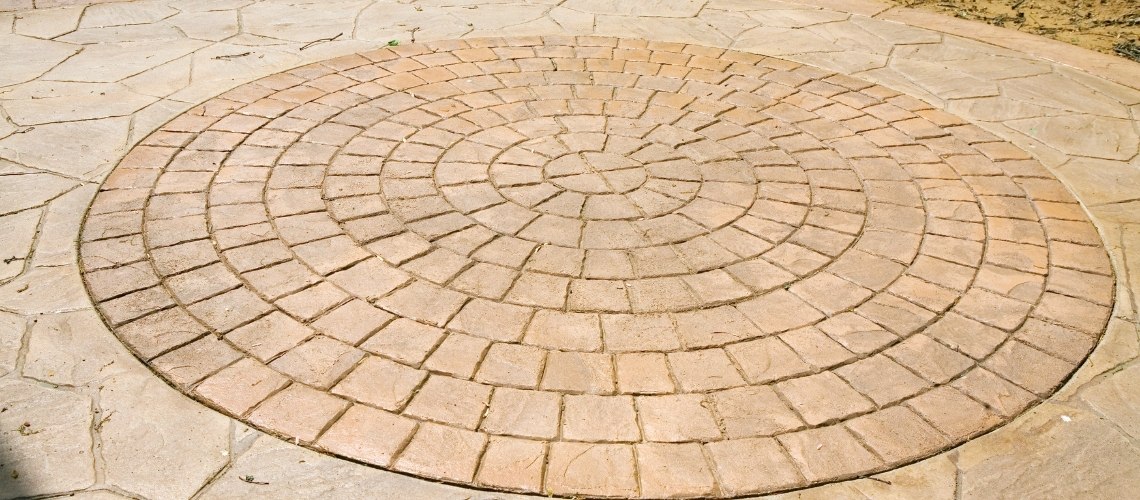
Small brick or cobblestone units add detail to short walks and entries. Across a driveway, that density can look busy. Ashlar or larger stone units often read better.
Stone-Look: Organic Variation and Broad Compatibility
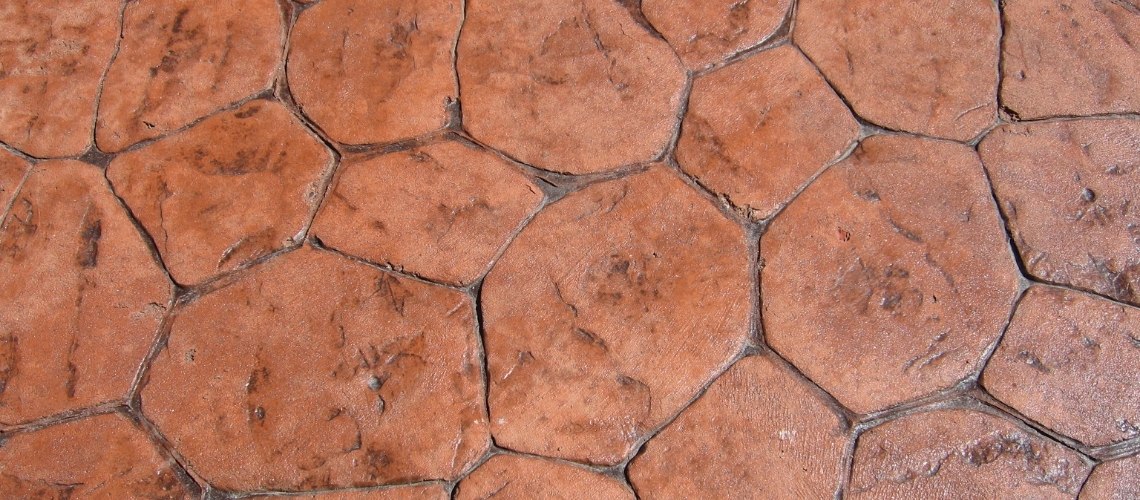
Stone-look patterns include ashlar slate, flagstone, fieldstone, and cut-stone arrangements. They can lean formal or natural depending on the layout and color.
Ashlar creates a tailored look for formal patios and front approaches. Random flagstone or fieldstone has looser shapes that work well near gardens. On wide slabs, choose enough variation to prevent an obvious repeating sequence.
Stone-look colors often combine a neutral base with a restrained secondary tone. Beige-gray, limestone, sandstone, slate, and muted brown are easier to coordinate than saturated colors. Keep contrast moderate for a natural appearance.
Wood-Look: Warmth Without Adding Another Paved Material
Wood-plank patterns can soften a patio, garden walk, or covered outdoor area. They work well when the home already uses wood or the landscape needs warmth beside brick and metal.
Longer plank proportions feel more contemporary, while shorter boards and stronger grain can read as rustic. Brown is not the only option. Weathered gray, driftwood, taupe, and low-contrast brown-gray combinations may fit Westchester County homes more easily than vivid orange or red-brown tones.
Wood-look concrete needs restraint. Deep grain, dark board lines, and strong contrast can feel exaggerated. Plan plank direction around the longest sightline, door threshold, and furniture layout.
READ MORE: Is a Stamped Concrete Driveway Worth It? Cost, Maintenance, and Long-Term Value
How Should the Project Type Change Your Choice?
Patios
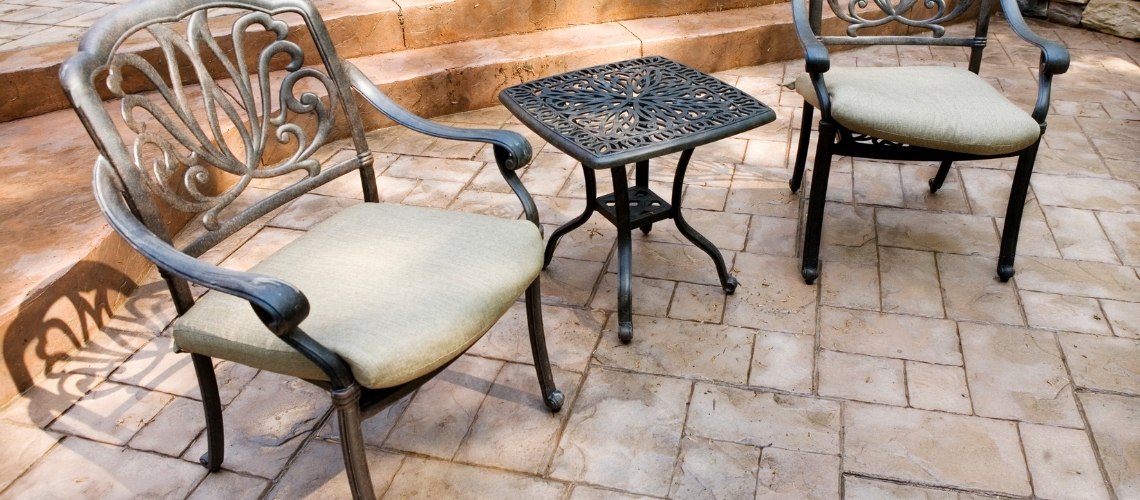
Patios need a balance of appearance and comfort. Moderate texture adds depth without making furniture unstable. Large units or seamless stone textures can make small spaces feel less crowded. In full sun, compare medium and light colors with dark options.
Color variation can disguise ordinary marks, while deep impressions may collect dirt. If the patio meets interior flooring, compare the materials from inside and outside.
Walkways, Steps, and Entrances
Walkways benefit from a directional pattern and texture appropriate for wet conditions. Brick, narrow ashlar, and regularly spaced stone can guide the eye toward the entrance. Keep borders simple near steps and small landings.
The Portland Cement Association’s decorative concrete guide cautions against smooth-troweled finishes in exterior or wet areas because reduced slip resistance can create a hazard. Pattern choice alone does not determine traction, so discuss texture, sealer, drainage, and any compatible traction additive as part of the finish specification.
Driveways
Driveways usually look better with a large-scale, repeat-resistant pattern. Ashlar slate, broad stone, and restrained seamless textures cover the area without appearing cluttered. Mid-tone neutral palettes can make tire marks and dust less obvious than very pale or nearly black finishes.
Snow removal deserves early attention in Westchester County. Deep joints and rugged textures can catch a shovel edge or complicate mechanical clearing. Snow-removal equipment can damage some stained or surface-colored concrete in cold climates. Ask how pattern depth, joints, and sealer will perform under winter use.
How Do Color Choices Affect Appearance and Maintenance?
A successful plan for stamped concrete colors has a dominant base and, when appropriate, a quieter accent. Integral color distributes pigment throughout the mix, while surface-applied systems change the surface appearance. The method affects the palette, variation, appearance of repairs, and care requirements.
Undertone matters more than the color name. Gray can lean blue, green, or brown; tan can read cream, gold, or orange. Compare samples beside the house in sun and shade, then compare them when wet because moisture and some sealers can deepen the apparent color.
Maintenance expectations should narrow the palette:
- Light colors can show leaves, soil, rust, and some spills more readily.
- Very dark colors can show dust, salts, surface wear, and fading contrast.
- Mid-tone, gently varied colors tend to conceal routine marks.
- Strong accent colors can lose their intended balance if high points wear differently from recessed areas.
- Gloss level affects appearance and may affect traction, so do not treat sealer as a purely cosmetic choice.
Sealers may enhance color and simplify cleaning, but products and exposure differ. Request written care instructions instead of assuming a universal resealing schedule.
How to Choose Stamped Concrete Patterns and Colors in Six Steps
1. Define the Use and Nonnegotiable Performance Needs
List vehicle traffic, foot traffic, wet exposure, furniture, sun, shade, drainage, snow removal, and cleaning expectations. Remove any pattern or finish that conflicts with the surface’s daily use.
2. Identify the Home’s Dominant Design Language
Classify the property as modern, traditional, transitional, rustic, or mixed. Then identify two or three permanent materials and colors that the concrete must complement. Prioritize the façade and major masonry over temporary furniture or seasonal plantings.
3. Select Pattern Scale Before Exact Pattern
Choose small, medium, or large visual units based on the slab area and viewing distance. Small patterns suit detail zones. Larger units and seamless textures generally read more calmly across patios and driveways. This step quickly reduces the number of stamped concrete patterns worth comparing.
4. Build a Two- or Three-Color Shortlist
Select one undertone family, then compare light, medium, and dark versions. Decide whether the project needs a secondary accent. Avoid choosing the base color, release or accent color, border, and sealer independently because each can affect how the others appear.
5. Review a Representative Sample on Site
Ask for a physical sample or project mockup that uses the proposed materials and method. Sampling methods may vary by project, but the principle remains the same: judge a meaningful area rather than relying on a thumbnail.
View the sample at different times, beside the house, and from the main indoor sightline. Confirm an acceptable range of variation rather than expecting every section to look identical.
6. Confirm Scope, Care, and Local Constraints in Writing
The estimate should identify the pattern, color system, accent treatment, border, texture, sealer, traction approach, joint strategy, preparation, and maintenance guidance. Also confirm whether the work is limited to private flatwork or extends into or affects the public sidewalk.
Local requirements for decorative concrete, sidewalks, and right-of-way work can vary by municipality in Westchester County. Homeowners should verify applicable building, zoning, permitting, landmark, and right-of-way requirements with the appropriate local municipality before finalizing a decorative design.
Frequently Asked Questions
What stamped concrete pattern makes a small patio look larger?
Large-format stone, seamless textures, and low-contrast colors create less visual interruption. Aligning the layout with the patio’s longest dimension can also help.
Should stamped concrete match the house exactly?
No. Exact matching can make the exterior feel flat. Choose a compatible undertone and repeat one element from the home, such as a warm gray from stonework or muted brown from trim.
Which colors hide dirt best?
Mid-tone neutrals with controlled variation often disguise routine dust, soil, and leaf marks better than very light or very dark colors. Driveways may benefit from gray-brown or variegated neutral palettes. Cleaning needs still depend on traffic, trees, drainage, and surface texture.
Can two stamped concrete patterns be combined?
Yes, but one should remain dominant. A simple border can define a patio or driveway without making the surface busy. Combining multiple field patterns, strong borders, and high-contrast colors can overwhelm a small area.
Will the installed color look exactly like a digital image?
No. Screens, lighting, moisture, materials, finishing, curing, and sealer affect the result. Use digital images to narrow the direction, then approve a physical sample and variation range.
Choose a Direction Before Requesting an Estimate
The best stamped concrete design balances architecture, intended use, and maintenance. Define your ideal pattern scale, undertone, texture, and variation range before comparing project estimates.
SMJ Homes, Inc. provides concrete stamping services for patios, driveways, and walkways. To review the property, discuss practical finish options, and define the project scope, contact SMJ Homes to request an estimate.